Significant Progress in Unraveling Microscopic Origin of Intertwined Density Wave in Nickelate Superconductors
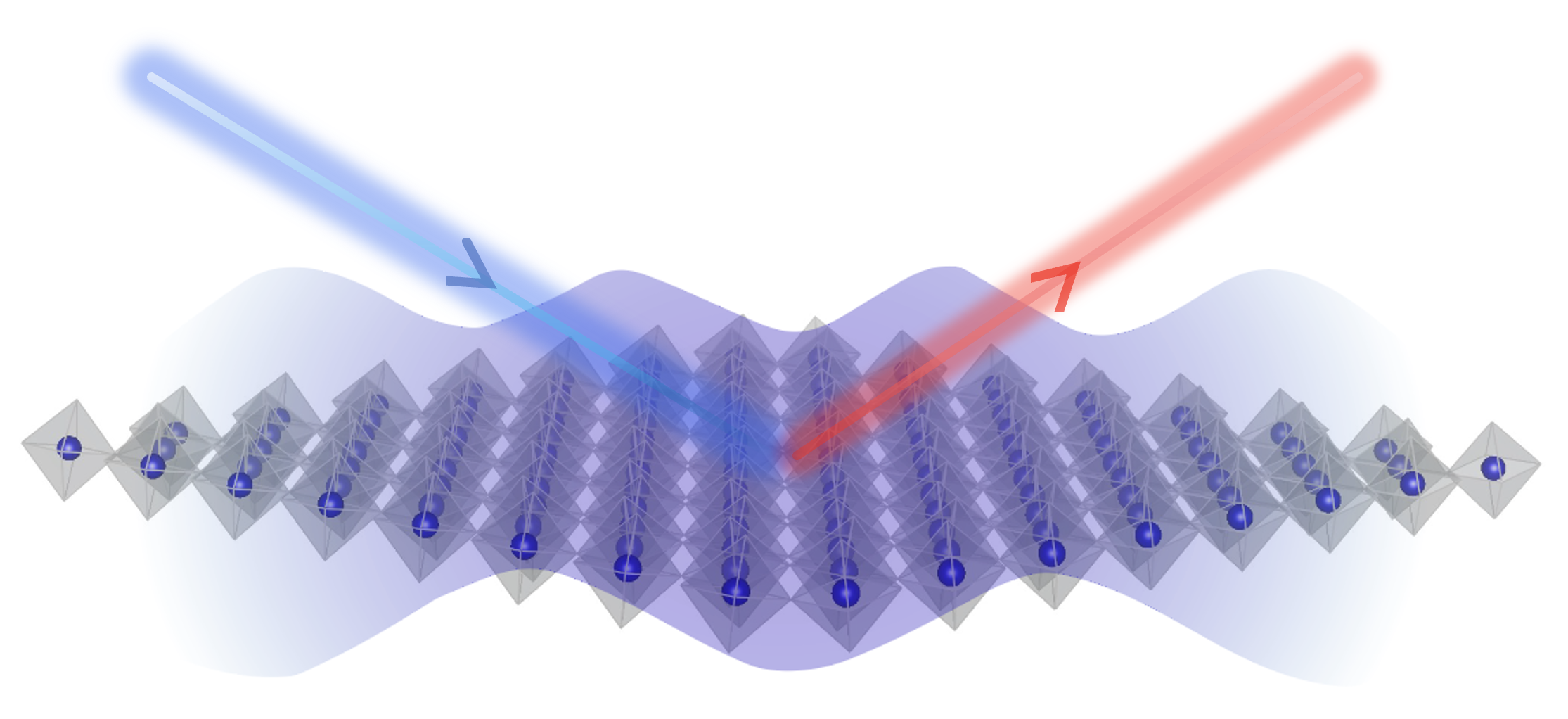
A collaborative research team from the Institute of High Energy Physics (IHEP) of the Chinese Academy of Sciences (CAS), Argonne National Laboratory (USA), Brookhaven National Laboratory (USA), and Arizona State University (USA) has, for the first time, clarified the microscopic origin of the intertwined density wave order in nickelate superconductors by employing synchrotron-based meV-resolved inelastic X-ray scattering (meV-resolved IXS). The related findings have been published on Physical Review X on January 23, entitled "Lattice-charge coupling in a trilayer nickelate with intertwined density wave order" (Phys. Rev. X 16, 011013 (2026)).
The microscopic mechanism of high-temperature superconductivity is recognized as one of the "125 Key Scientific Questions" by Science. Unlocking this mystery holds the potential to guide the design of room-temperature superconductors and trigger a series of transformative technological breakthroughs. As the world's third family of high-temperature superconductors (at near-ambient pressure), nickel-based superconductors have sparked intensive research since their discovery. Within their phase diagram, the charge/spin density wave (CDW/SDW) order, which neighbors the superconducting phase, along with its origin and its relationship with superconductivity, constitutes a long-standing pivotal question in condensed matter physics.
Conventional frameworks suggest that such "intertwined charge and spin orders" are typically accompanied by significant lattice responses, such as phonon softening behavior. In this work, meV-resolved IXS measurements on trilayer nickelate RE₄Ni₃O₁₀ (RE=Pr, La) revealed, for the first time, the surprising absence of any phonon anomaly around the CDW wave vector across a wide temperature range. Combining phonon density functional theory and electron susceptibility calculations, we further demonstrate that the intertwined order is stabilized purely by the electronic degrees of freedom, specifically by the spin density wave. Our results sharply contrast with past observations in cuprates, revealing an intertwined electronic order with minimal coupling to the lattice, and highlighting the crucial role of the spin degree of freedom in nickelate superconductors. This work provides key evidence and a new perspective for understanding the correlation mechanism between density wave order and superconductivity and beyond.
Associate Professor JIA Xun from IHEP serves as the primary author and a co-corresponding author of this paper, participating in the overall design of the work, conducting the experiments and performing data analysis. This work was supported by The Chinese Academy of Sciences and The Institute of High Energy Physics.
Paper link: https://link.aps.org/doi/10.1103/s5j9-cbg7.