AI Technology Leads New Paradigm in Scientific Research at Large-scale Facilities: First Data Analysis Agent for Spallation Neutron Source Released
From January 21 to 22, RZera & Dr.Sai-Rongzai Agent Training Session and Agent Application Seminar was successfully held at the China Spallation Neutron Source (CSNS), Institute of High Energy Physics of Chinese Academy of Sciences (IHEP, CAS). The event was jointly organized by the CSNS Data Analysis Group, the Computing Center of IHEP, and the Greater Bay Area Branch of the National High Energy Physics Scientific Data Center. The seminar aimed to promote exchanges and cooperation in neutron experiment data processing and analysis among various CSNS spectrometers and to advance the intelligent and efficient development of neutron data. The conference brought together experts and scholars from multiple research teams, including CSNS, IHEP Computing Center, and High Energy Photon Source. Attendees included LIANG Tianjiao, Deputy Director of Dongguan Branch of IHEP, QI Fazhi, Director of Computing Center of IHEP, and ZHANG Junrong, Deputy Director of the Neutron Science Department of the Dongguan Branch of IHEP.
Building an Agent Technology Ecosystem to Upgrade the Scientific Research Toolchain
On the first day of the conference, Dr.Sai-Rongzai 1.0 agent system and RZera 3.0 data analysis software framework were officially released.
Dr.Sai-Rongzai, jointly developed by the CSNS Data Analysis Group and IHEP Computing Center, utilizes large language models to automate neutron powder diffraction (NPD) refinement. Without human intervention, it can refine NPD data for standard samples such as Si and more complex samples like zeolites to achieve a weighted-profile R-factor (Rwp) below 5%. The system supports natural language interaction for optimizing refinement results and automatically generates data analysis reports, significantly improving analysis efficiency and accuracy. In the future, Dr.Sai-Rongzai will integrate more intelligent analysis tools to build a comprehensive intelligent analysis platform covering various types of neutron spectrometers.
RZera is a data analysis software framework independently developed by the CSNS Data Analysis Group. It adopts an open-source collaboration model, bringing together the expertise of scientists from various spectrometers. Currently, it supports the processing of multiple types of neutron scattering data, including diffraction, total scattering, and small-angle scattering. RZera achieves seamless integration between data reduction and agent analysis. The framework will continue to expand, ultimately meeting the data analysis needs of all CSNS spectrometers and driving innovation in neutron scattering research.
Focusing on the Integration of Agents and Infrastructure to Discuss Future Development Paths
The seminar held on January 22 adopted an open discussion format, where participating experts engaged in in-depth exchanges on the application of agent technology in large-scale scientific facilities such as neutron sources and photon sources. Core topics included: Expanding agent application scenarios: exploring how to integrate agents into the entire process of experimental design, real-time data analysis, and result generation. Developing specialized models: with a particular focus on optimizing models for complex data structures such as neutron scattering and synchrotron radiation. Building a data ecosystem: focusing on the creation of high-quality, standardized scientific datasets to effectively support agent training and optimization. Comprehensive infrastructure upgrades: covering how computing power, storage, and network resources can meet the technical requirements for large-scale agent deployment. Regarding application scenarios, experts paid special attention to innovative uses of agents in areas such as user proposal screening for large-scale facilities, cross-facility joint data analysis, high-quality reconstruction from sparse/limited-angle data, intelligent screening of new materials (e.g., lithium battery cathode materials), and intelligent analysis of high-temporal-resolution data and mechanism exploration.
The participating experts unanimously agreed that agent technology is transitioning from a traditional "auxiliary tool" to an active "scientific research partner." Its deep integration with large-scale scientific facilities such as photon sources and neutron sources will strongly promote the formation and development of a new paradigm for data-driven scientific research.
Achievements and Prospects: Agent-Driven Innovation and Upgrades for Large-scale Scientific Facilities
Through the model of "technical training + application discussion," this conference not only systematically demonstrated the application achievements of agent technology at the CSNS but also provided a clear framework for the application of agent technology in China's large-scale scientific facilities. In the future, the collaborating teams will continue to organize relevant technical training and thematic exchanges, persistently advancing the intelligent upgrade of data processing methods for photon sources and neutron sources, promoting cross-facility collaboration, and facilitating the implementation and application of cutting-edge technologies in scientific research practices.
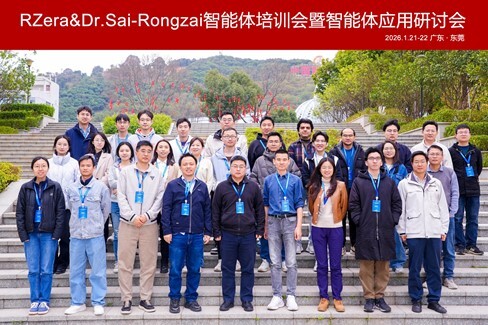
Group Photo