Russian Federation Minister of Science and Higher Education Delegation Visits Dongguan Campus of IHEP
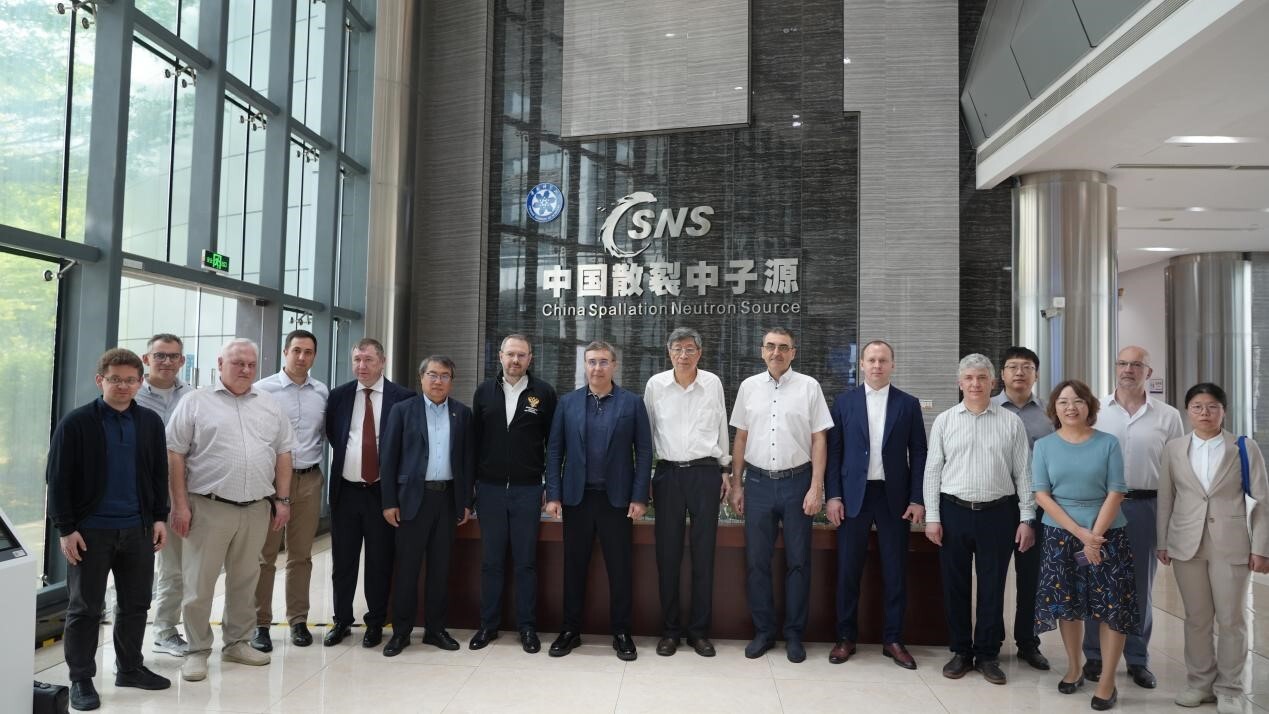
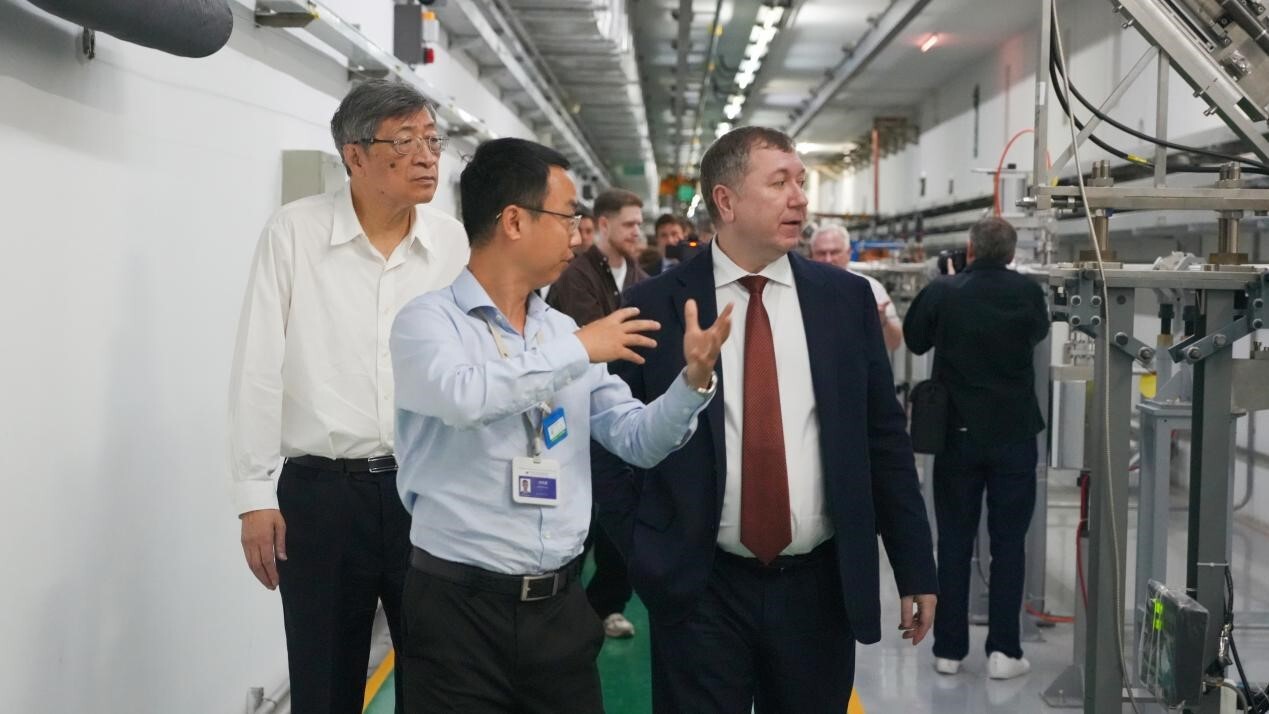
A delegation led by Mr. FALKOV Valery, Minister of Science and Higher Education of the Russian Federation, visited the Dongguan Campus of the Institute of High Energy Physics of the Chinese Academy of Sciences on April 16. The two sides held in-depth exchanges on the operation of large-scale scientific facilities, applications of neutron science, cutting-edge research in particle physics, and bilateral scientific and technological cooperation, advancing China-Russia cooperation in nuclear physics, neutron physics, large-scale scientific facilities and other fields to a higher level.
Delegation members included representatives from the Ministry of Science and Higher Education of the Russian Federation, the Kurchatov Institute, the Russian Academy of Sciences, and other Russian universities and financial institutions. Academicians CHEN Hesheng and CAO Zhen of the Chinese Academy of Science welcomed the guests.
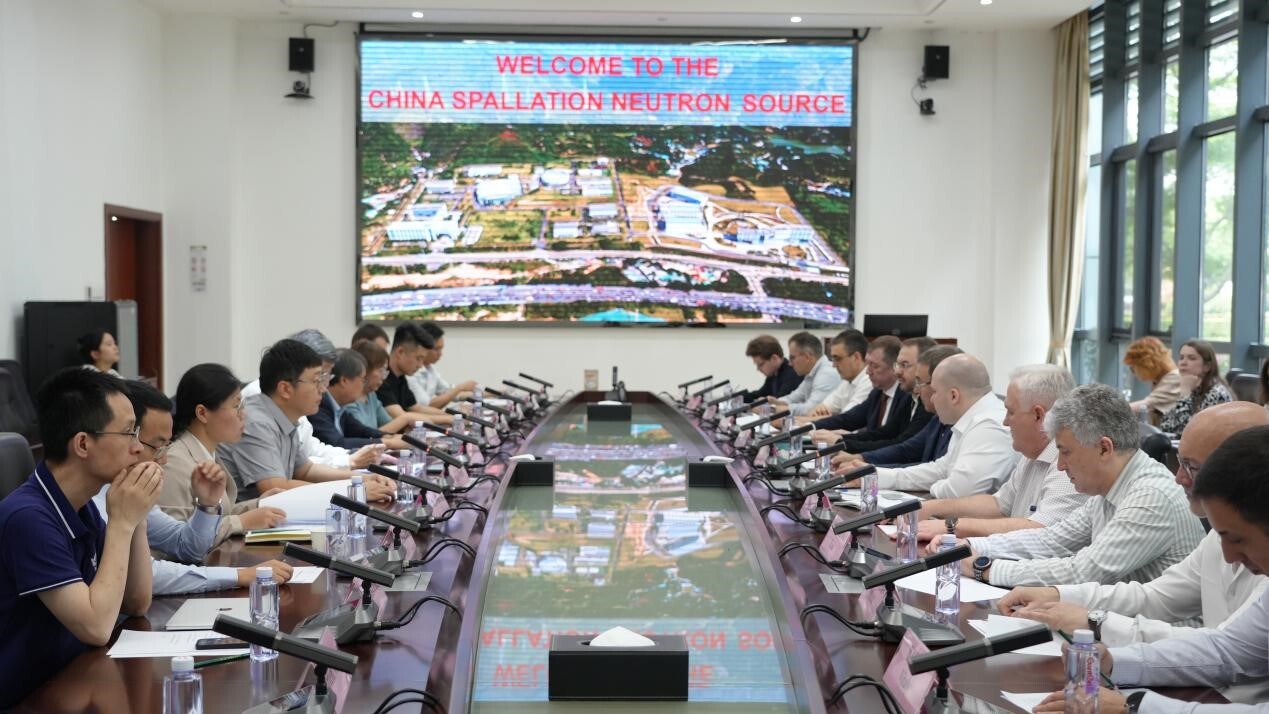
Hosted by Prof. LI Xiao, deputy Director of Dongguan Campus, a bilateral meeting was held. Academician CHEN Hesheng, Manager the Phase I Project of the China Spallation Neutron Source (CSNS), delivered a welcome speech. He reviewed the long-standing cooperation between China and Russia in particle physics, nuclear physics and neutron science, noting that CSNS has a large number of Russian users and that the two sides have conducted in-depth exchanges in multiple cutting-edge fields with broad potential for future cooperation.
Mr. FALKOV Valery stated that Russia attaches great importance to Russia-China scientific and technological cooperation, and large-scale scientific facilities serve as a vital platform for bilateral research collaboration. He commended the remarkable achievements in the construction and operation of large-scale scientific facilities including the China Spallation Neutron Source and synchrotron radiation light source, adding that Russia is ready to further expand cooperation areas with China, strengthen researcher exchanges and joint research, and jointly advance the scientific and technological undertakings of both countries.
Prof. YIN Wen gave a short report on the construction history, current operation, scientific research applications, upgrade planning and international cooperation of the CSNS. In the open discussion session, Academician CAO Zhen briefed on the progress of the HUNT project and highlighted the cooperation plan with Russia on the Baikal Neutrino Experiment.
This visit marks an important opportunity for China and Russia to deepen cooperation in large-scale scientific facilities and cutting-edge science and technology. It has further consolidated consensus on cooperation in neutron physics, nuclear physics and particle physics, laying a more solid foundation for follow-up joint research, talent exchange and platform sharing. Going forward, the CSNS will continue to uphold the philosophy of openness and sharing, work with Russian research institutions to expand the breadth and depth of cooperation, jointly promote the innovative development of large-scale scientific facilities, inject new momentum into China-Russia scientific and technological cooperation, and contribute more to global basic scientific research.