

Cosmic rays are the energetic subatomic particles from the extraterrestrial bodies, with the kinetic energy larger than 103 eV (1eV =1.62 ×10⁻¹⁹ J). So far, the highest energy cosmic rays measured are up to 1020 eV. The cosmic rays principally consist of nucleons, electrons and positions. In the interstellar space, these charged particles frequently undergo scatterings with the magnetic turbulence. After long-time propagation, the cosmic rays have lost their correlation with the initial direction, thus the information on the sources also loses. Hence despite that the cosmic rays have been discovered over 100 years, their origin remains an open question.
The available observation of cosmic rays contains: the energy dependence (called energy spectrum), the composition dependence (called abundance) and the arrival distribution (called anisotropy). Nowadays, more and more instruments (either space-borne or ground-based) have been devoted to detect the cosmic rays. LHAASO, with its peculiar advantages of the high altitude, the huge effective area, and the hybrid detectors, is now serving as an excellent experiment for solving the puzzle of century of cosmic rays.
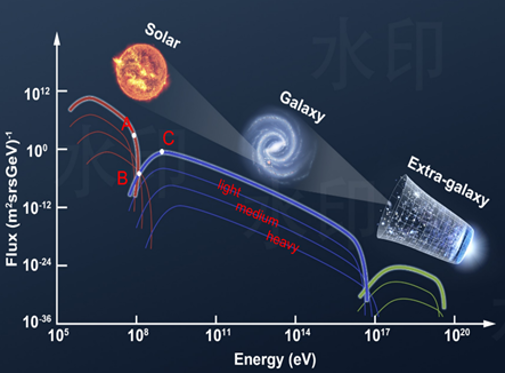
Figure1 The cartoon of spectral feature of cosmic rays
Cosmic-ray Origin: Figure 1 illustrates the cosmic-ray energy spectrum from 105 eV ( 100keV) to 102 eV (100 EeV), in which there are three major transitions. These transitions indicate the origin of the cosmic rays. Less than 1010 eV (10 GeV), the cosmic rays are of solar origin [1]. From ~109 eV (1GeV) to ~1017 eV (100 PeV), the cosmic rays are of Galactic origin, and they are usually regarded to be accelerated in the relics of massive stars, for example supernova remnants, pulsars and pulsar wind nebulae [2, 3]. Recently more studies propose that the massive stars themselves could also be the acceleration sites [4]. Start from ~1017 eV (100 PeV), the cosmic rays are gradually dominated by the extragalactic components. The possible candidate sources ares gamma-ray bursts, active galactic nucleus, star-burst galaxies etc [5].
Cosmic-ray energy spectra: The energy dependence of cosmic-ray flux is approximately a power-law. But the precise measurements show there are several prominent spectral variations in the energy spectrum. Figure 2 illustrates the all-particle spectrum from 1013 eV (10 TeV) to 1020 eV (100 EeV), with the major spectral structures. The first significant transition is a steepening of the spectrum at ~3×10¹⁵ eV (3 PeV), where the power index changes from -2.7 to -3.1. This is so-called cosmic-ray “knee”. At 5×10¹⁸ eV ( 5 EeV), the spectrum flatters, with index changing to -2.3. The feature is named as “ankle”. Above 5×10¹⁹ eV (50 EeV), the spectrum falls off exponentially, which is well-known as “GZK cutoff”. Moreover, between “knee” and “ankle”, at 1017 eV ( ~100PeV), there is another slight steepening, where the index changes from -3.1 to -3.3. It is usually called the second “knee” [5]. At lower energy, recent years, many experiments found that cosmic-ray nuclei flux gradually harden above ~200 GeV and subsequently soften at tens of TeV [6].
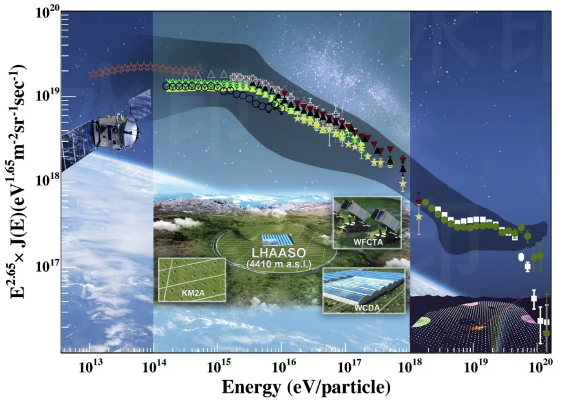
Figure2 spectral features in the cosmic-ray energy spectrum
Cosmic-ray anisotropy: The mass of evidence has identified that the cosmic-ray intensities from different directions is not equal, which is called anisotropy. Figure 3 shows the all-sky anisotropy in the equatorial coordinate at ~10 TeV combined with the Tibet-AS and the IceCube experiments [7]. The red and blue regions in the sky indicate the relative excess and deficit of cosmic-ray flux respectively, where the maximum relative excess/deficit up to 2×10⁻³. Furthermore, the various experiments have demonstrated that the anisotropy has the significant energy dependence, which exhibits complex morphologies. From ~1012 eV (1 TeV) to ~1020 eV (100 EeV), the relative intensity varies from ~10-4 to ~10-2. The features of cosmic-ray anisotropy and their energy dependence provide insights into the origins of anisotropy, including local accelerators and propagation, even the local magnetic environment.
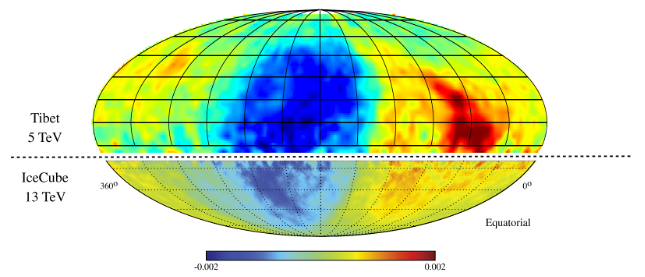
Figure3 Combined cosmic ray anisotropy of Tibet-ASγ and IceCube in the equatorial coordinate [7]
1. Miroshnichenko, L., Solar Cosmic Rays. Vol. 405. 2015.
2. Cao, Z., et al. The Large High Altitude Air Shower Observatory (LHAASO) Science Book (2021 Edition). 2019. arXiv:1905.02773 DOI:10.48550
3. Cao, Z., et al., Ultra-High-Energy Gamma-Ray Astronomy. Annual Review of Nuclear and Particle Science, 2023. 73:341-363.
4. Aharonian, F., R. Yang, and E. de Oña Wilhelmi, Massive stars as major factories of Galactic cosmic rays. Nature Astronomy, 2019. 3:561-567.
5. Anchordoqui, L.A., Ultra-high-energy cosmic rays. Physics Reports, 2019. 801:1-93.
6. Aguilar, M., et al., The Alpha Magnetic Spectrometer (AMS) on the international space station: Part II - Results from the first seven years. Physics Reports, 2021. 894:1-116.
7. Ahlers, M. and P. Mertsch, Origin of small-scale anisotropies in Galactic cosmic rays. Progress in Particle and Nuclear Physics, 2017. 94:184-216.